


What to Expect on Your First Day at a Residential Mental Health Program
Deciding to enter a residential mental health program is a brave, life-changing step — and it’s completely normal to feel nervous about day one. Not knowing what to expect is often the hardest part. The good news is that the first day is designed to be supportive, not overwhelming, with a team ready to welcome you and walk you through every step.
This guide explains exactly what to expect on your first day at a residential mental health program, so you can arrive feeling informed and prepared instead of anxious.
Learn more about our residential mental health programs or call us now at 888-272-2062.
A Quick Refresher: What Is a Residential Mental Health Program?
A residential mental health program provides treatment for people who benefit from round-the-clock care. You move into a residential facility and receive support from psychiatrists, psychologists, therapists, and other clinicians, with meals, housekeeping, and rest built into your day.
Stays often last around 30 days, though the length depends on the progress you make toward your goals. Because you’re living away from home, you can focus fully on healing without everyday distractions — and that focus starts on day one.
Before You Arrive: How to Prepare
A little preparation goes a long way toward easing first-day nerves. Before you arrive, call the admissions team and ask:
- What to pack — how many days of clothing to bring and which personal items are allowed
- Which devices are permitted — phones, tablets, and laptops, and any limits on their use
- What not to bring — most programs restrict certain items for everyone’s safety and comfort
- Logistics — arrival time, transportation, and who will greet you
Knowing these details in advance removes a lot of the guesswork. Still, it’s natural to feel some hesitation or fear no matter how prepared you are — and the staff expects that.
Step by Step: What Happens on Your First Day
While every program is a little different, most first days follow a similar, reassuring rhythm.
Arrival and Admissions
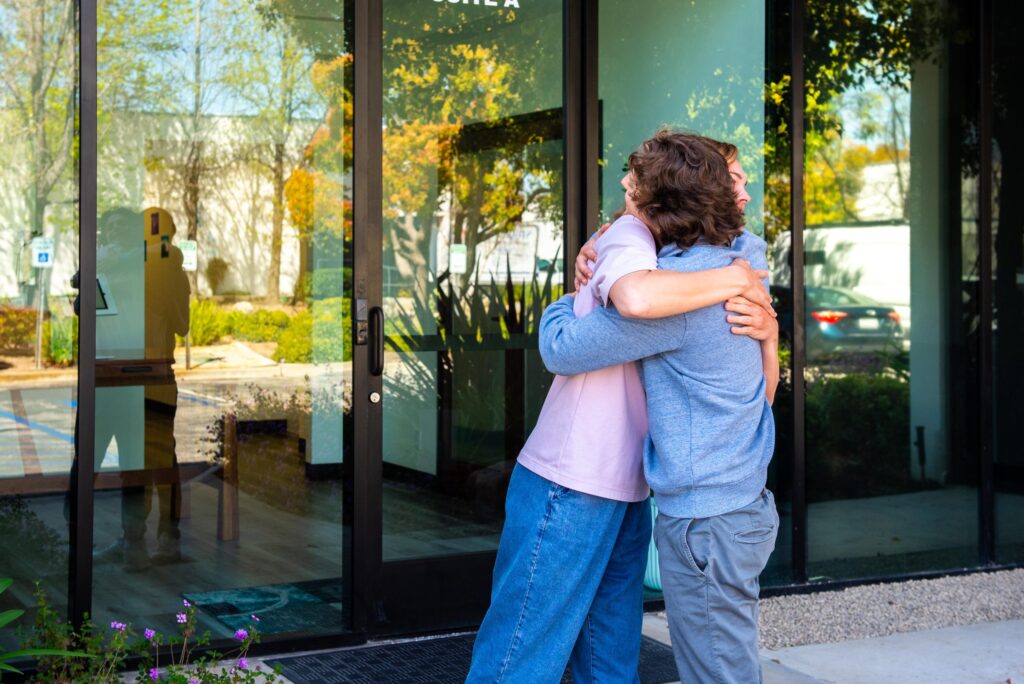
When you arrive, a staff member will greet you and help you check in. You’ll complete intake paperwork, and your belongings may be reviewed to make sure everything aligns with program guidelines. This part is routine — its purpose is simply to keep the environment safe and comfortable for everyone.
Medical and Psychological Assessments
Next, you’ll meet with medical and psychological experts who perform a full psychological evaluation. They’ll ask about your mental and physical health history and how your symptoms show up in daily life. These conversations aren’t a test — they’re how your team gets to know you so they can tailor your care.
Medication Review
If you take any medications, the team will review them to confirm the type and dosage are right for you, and make adjustments if needed. A psychiatrist may also discuss whether new medication could support your treatment.
Meeting Your Treatment Team and Building Your Plan
Using what they learn during your assessments, your team designs a personalized menu of therapies — which may include individual, group, family, and holistic approaches. This is also a great time to ask questions about your schedule and what your days will look like.
A Tour and Settling In
You’ll get a tour of the facility and time to settle into your room. Many residential programs are set in calm, comfortable surroundings to support healing. Taking a moment to unpack and get oriented can help the space start to feel familiar.
Meeting Peers and Your First Night
At some point, you’ll begin meeting others in the program. There’s real comfort in being surrounded by people who share a common focus — healing — and peer connection is one of the most valuable parts of residential care. By the end of day one, the unfamiliar usually starts to feel a little more like home.
It’s Normal to Feel Nervous — Here’s Why Day One Gets Easier
Many people arrive feeling a mix of fear, relief, and uncertainty all at once. That’s completely normal. The structure of the first day is intentionally gentle: assessments, introductions, and orientation rather than intensive therapy. Your team’s first job is simply to help you feel safe and welcome. Most people find that the anxiety they carried in starts to ease once they realize how much support surrounds them.
If you or someone you love is in immediate danger or experiencing a mental health crisis, call or text 988 (the Suicide & Crisis Lifeline) right away.
Conditions Treated in a Residential Mental Health Program
Residential programs treat a wide range of mental health disorders, and your team will assess which condition you have and how severe your symptoms are. Commonly treated conditions include:
- Depression — including postpartum depression and seasonal affective disorder
- Anxiety disorders — including panic disorder, OCD, and generalized anxiety
- PTSD and complex trauma (C-PTSD)
- Bipolar disorder
- Borderline Personality Disorder (BPD)
- Eating disorders — including anorexia, bulimia, binge eating disorder, and ARFID
- Schizophrenia and psychosis
- Grief and loss
- Self-harm
- Suicidal ideation
Therapies You May Experience After Day One
Once your plan is in place, your treatment may draw on several evidence-based and holistic therapies, including:
- Cognitive Behavioral Therapy (CBT)
- Dialectical Behavior Therapy (DBT)
- Individual psychotherapy
- Group therapy
- EMDR
- Psychological assessment and diagnosis
- Equine therapy
- Family therapy
- Holistic therapy
- Stress-reduction therapy
- Psychiatry and medication management
- Education and career counseling
Exposure to more than one type of therapy helps you build healthy coping skills and make progress across several areas of your life.
Am I a Good Fit for Residential Treatment?
If you’re not sure whether residential care is right for you, ask yourself:
- Is my home environment — the people or situations in it — triggering my symptoms?
- Can I make the time commitment to live in a residential facility?
- Are my symptoms severe enough that I need help managing them?
- Have I tried outpatient programs without the results I hoped for?
- Has my mental health caused difficulties at work or in my relationships?
- Would I benefit from multiple therapies and managed medication?
If you answered yes to several of these, residential treatment may be worth exploring.
Frequently Asked Questions About Your First Day
What happens on the first day of residential treatment?
The first day focuses on welcoming you, completing intake paperwork, and meeting with medical and psychological staff for assessments. You’ll review any medications, meet your treatment team, tour the facility, and settle into your room — not intensive therapy.
What should I bring on my first day?
Generally, a few days’ worth of comfortable clothing and approved personal items. Because policies vary, call the admissions team beforehand to confirm exactly what to pack and what to leave at home.
Can I bring my phone or laptop?
Device policies differ by program. Some allow limited use during certain hours, while others restrict devices to support focus and privacy. Ask admissions in advance so there are no surprises.
Will I start therapy on the first day?
Usually not. Day one is mostly about assessments and orientation so your team can build a plan tailored to you. Structured therapy typically begins afterward.
How long will I stay?
Many stays last around 30 days, but the timeline depends on your individual progress and goals. Your team will personalize it with you.
Is it normal to feel scared on the first day?
Absolutely. Nervousness is one of the most common feelings on day one, and the staff is experienced in helping new residents feel at ease.
Begin Residential Treatment in Southern California
Living with a mental health disorder can make even the best days challenging, and the program you trust should feel safe, comfortable, and fully staffed to meet your needs. The Meadowglade created our residential mental health program to give people a secure space to open up about their thoughts, emotions, and behaviors. Our licensed therapists and clinicians work with each person to draw out their strengths and ease the burden of living with a mental illness.
Contact us now and let’s talk about what your first day — and your recovery — could look like. Let today be the day you take charge of your mental health and begin to feel better.